
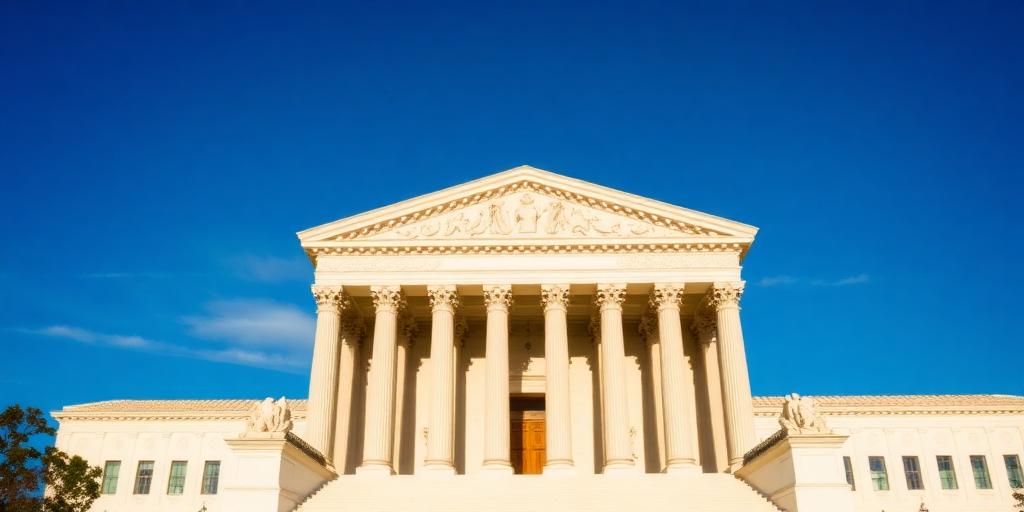
The Role of the Supreme Court in American Democracy
The Supreme Court of the United States stands as a cornerstone of American democracy, serving as the final arbiter of legal disputes and guardian of the Constitution. Its role is multifaceted, involving the interpretation of laws, the protection of individual rights, and the maintenance of balance within the government. Understanding this role is crucial for any citizen seeking to engage meaningfully with the American political system.
Judicial Review: Interpreting the Constitution
At the heart of the Supreme Court's function is the power of judicial review, established in the landmark case of Marbury v. Madison (1803). This power allows the Court to determine whether a law or action of the executive or legislative branch is constitutional. Through judicial review, the Court ensures that the government operates within the boundaries set by the Constitution, thereby safeguarding the principles of limited government and the rule of law.
The Court's interpretations of the Constitution evolve over time, reflecting changes in societal values and understanding. This adaptability is essential for the Constitution to remain relevant and applicable to contemporary issues. However, the Court's interpretations are not without controversy, often sparking debates about the proper role of the judiciary in a democratic society.
Protecting Individual Rights
One of the most vital functions of the Supreme Court is the protection of individual rights and liberties. The Bill of Rights, comprising the first ten amendments to the Constitution, guarantees fundamental freedoms such as freedom of speech, religion, and assembly. The Supreme Court plays a critical role in defining the scope and limits of these rights, ensuring that they are not infringed upon by the government.
Cases involving issues such as free speech, religious freedom, and due process often come before the Court, requiring the justices to balance individual liberties with the interests of society. The Court's decisions in these cases have a profound impact on American life, shaping the way individuals interact with the government and with each other.
Maintaining Balance of Power
In addition to interpreting laws and protecting individual rights, the Supreme Court plays a crucial role in maintaining the balance of power among the three branches of government. The system of checks and balances, enshrined in the Constitution, ensures that no single branch becomes too dominant. The Supreme Court serves as a check on the legislative and executive branches, ensuring that they do not exceed their constitutional authority.
The Court's decisions can limit the power of the President or Congress, and its rulings can shape the relationship between the federal government and the states. This function of the Court is essential for preserving the separation of powers and preventing tyranny.
The Appointment Process and Its Implications
The appointment of Supreme Court justices is a highly politicized process, with the President nominating individuals who share their judicial philosophy and the Senate providing advice and consent. The political nature of the appointment process raises questions about the impartiality of the Court and the potential for partisan influence.
Given the lifetime tenure of Supreme Court justices, their appointments can have a lasting impact on the direction of American law and society. Therefore, it is essential for citizens to be informed about the qualifications and judicial philosophies of nominees and to engage in the confirmation process.
Conclusion
The Supreme Court plays a vital role in American democracy, serving as the ultimate guardian of the Constitution, protector of individual rights, and maintainer of the balance of power. Understanding the Court's function and its impact on American life is essential for informed citizenship and effective participation in the democratic process. As the Court continues to shape the legal landscape of the United States, it is incumbent upon citizens to remain engaged, informed, and vigilant in safeguarding the principles of liberty and justice for all.
Long-Tail Keywords:
- Supreme Court's impact on democracy
- Role of judicial review in the US
- Protecting individual rights: Supreme Court
- Checks and balances: Supreme Court's role
- Supreme Court appointment process


