
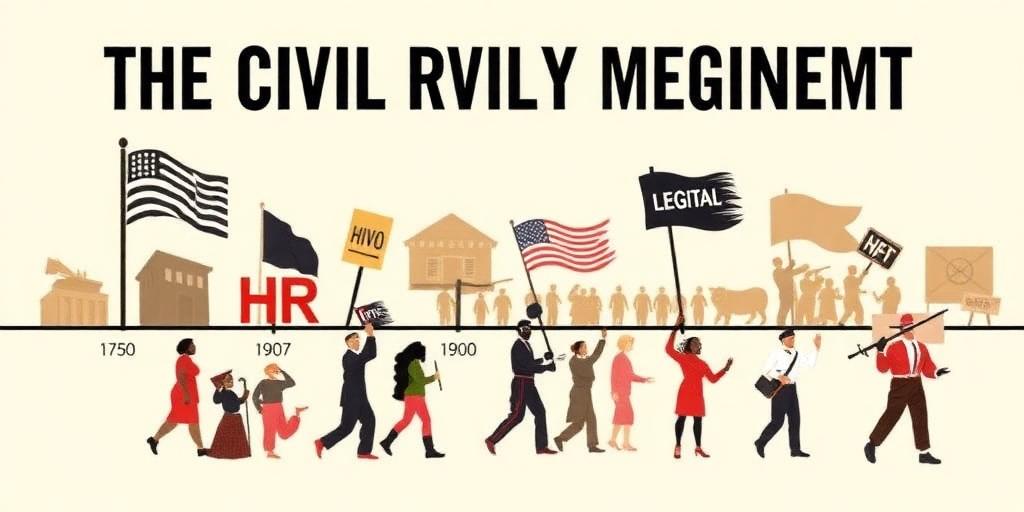
The History of Civil Rights in the United States
The history of civil rights in the United States is a complex and multifaceted narrative, marked by both progress and persistent challenges. It encompasses the struggle for equality and justice for all Americans, irrespective of race, ethnicity, gender, religion, or other characteristics. This article provides an overview of the key events, figures, and legal milestones that have shaped the civil rights landscape in the U.S.
Early Struggles and the Abolitionist Movement
The roots of the civil rights movement can be traced back to the era of slavery. The abolitionist movement, which gained momentum in the 19th century, sought to end the institution of slavery. Key figures such as Frederick Douglass, Harriet Tubman, and William Lloyd Garrison played pivotal roles in advocating for the freedom and rights of enslaved people. Their tireless efforts, through speeches, writings, and activism, laid the groundwork for future civil rights advancements.
The Civil War and Reconstruction Era
The Civil War (1861-1865) was a turning point in the fight for civil rights. The Union victory led to the abolition of slavery with the passage of the 13th Amendment in 1865. The Reconstruction Era (1865-1877) that followed aimed to rebuild the nation and establish rights for newly freed African Americans. The 14th Amendment (1868) granted citizenship and equal protection under the law to all persons born or naturalized in the U.S., and the 15th Amendment (1870) prohibited the denial of voting rights based on race.
The Jim Crow Era and Segregation
Despite these constitutional amendments, the promise of equality remained unfulfilled. The Jim Crow laws, enacted in the late 19th and early 20th centuries, enforced segregation and discrimination against African Americans in the Southern states. These laws affected nearly every aspect of life, including education, housing, employment, and public accommodations. The Supreme Court's decision in Plessy v. Ferguson (1896) upheld the constitutionality of "separate but equal" facilities, further entrenching segregation.
The Modern Civil Rights Movement
The mid-20th century witnessed the rise of the modern civil rights movement, characterized by nonviolent resistance and civil disobedience. Key events and figures include:
- Brown v. Board of Education (1954): The Supreme Court overturned Plessy v. Ferguson, declaring state-sponsored segregation in public schools unconstitutional.
- Rosa Parks and the Montgomery Bus Boycott (1955-1956): Rosa Parks' refusal to give up her seat on a bus sparked a year-long boycott, led by Martin Luther King Jr., which challenged segregation in public transportation.
- Martin Luther King Jr.: A central figure in the civil rights movement, King advocated for nonviolent protest and equality. His leadership was instrumental in the passage of landmark civil rights legislation.
- The Civil Rights Act of 1964: This landmark legislation outlawed discrimination based on race, color, religion, sex, or national origin.
- The Voting Rights Act of 1965: This act prohibited discriminatory voting practices and authorized federal oversight of elections in areas with a history of discrimination.
Ongoing Challenges and the Pursuit of Equality
While significant progress has been made, the struggle for civil rights continues in the 21st century. Issues such as racial profiling, police brutality, voting rights restrictions, and economic inequality persist. Contemporary movements, such as Black Lives Matter, reflect the ongoing fight for justice and equality. The pursuit of civil rights remains a critical aspect of American society, requiring continuous vigilance and action to ensure that the principles of equality and justice are upheld for all.
Conclusion
The history of civil rights in the United States is a testament to the resilience and determination of those who have fought for equality. From the abolitionist movement to the modern civil rights era, the journey has been marked by both triumphs and setbacks. While legal and social barriers have been dismantled, the pursuit of true equality remains an ongoing endeavor. Understanding this history is essential for addressing contemporary challenges and building a more just and equitable society.


