
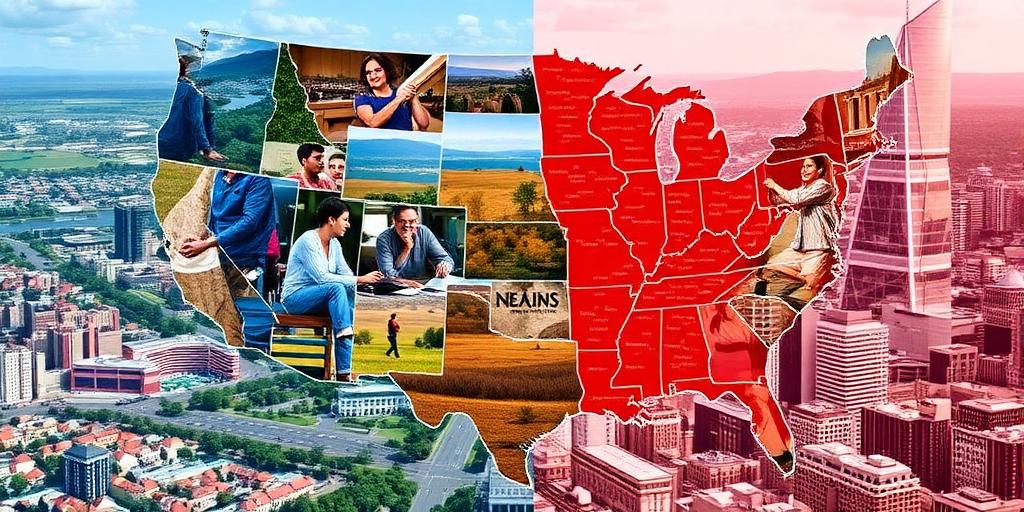
Red States vs. Blue States: Understanding the Divide
The American political landscape is often painted in broad strokes of red and blue, representing the Republican and Democratic parties, respectively. This division, while seemingly straightforward, encompasses a complex interplay of factors including demographics, socio-economic conditions, historical influences, and cultural values. Understanding the nuances of this divide is crucial for navigating contemporary American politics.
Historical Context
The roots of the red state/blue state divide can be traced back to the Civil War and the subsequent realignment of political affiliations. The South, historically Democratic, began shifting towards the Republican Party in the mid-20th century, particularly during the Civil Rights era. This shift was fueled by differing views on federal intervention and social issues. Meanwhile, the Northeast and West Coast solidified as Democratic strongholds, driven by progressive social policies and diverse populations.
Key Differentiating Factors
Several factors contribute to the political alignment of states:
- Demographics: Urban areas with diverse populations tend to lean Democratic, while rural areas with predominantly white populations often favor Republicans.
- Socio-economic Conditions: States with higher levels of education and income inequality often lean Democratic. Conversely, states with a larger working-class population may lean Republican, particularly on economic issues.
- Cultural Values: Red states often emphasize traditional values, religious conservatism, and individual liberty. Blue states tend to prioritize social justice, environmental protection, and government regulation.
- Economic Activities: States heavily reliant on agriculture, mining, or manufacturing may align with Republican policies that emphasize deregulation and tax cuts. States with a strong technology sector or service-based economy may favor Democratic policies that support innovation and social programs.
The Modern Political Landscape
The red state/blue state divide has become increasingly pronounced in recent decades, characterized by partisan polarization and gridlock. This polarization is further exacerbated by:
- Gerrymandering: The manipulation of electoral district boundaries to favor one party over another.
- Media Fragmentation: The rise of partisan media outlets that reinforce existing beliefs and create echo chambers.
- Campaign Finance: The influence of money in politics, which allows special interests to shape policy and promote partisan agendas.
Beyond Red and Blue: Nuances and Variations
It's crucial to recognize that the red state/blue state dichotomy is an oversimplification. Many states exhibit a mix of political viewpoints and demographic characteristics. "Purple states," such as Pennsylvania, Wisconsin, and North Carolina, are closely contested and can swing between parties in different election cycles. Even within predominantly red or blue states, significant pockets of opposition exist, reflecting the diversity of American society.
The Future of American Politics
Understanding the red state/blue state divide is essential for informed civic engagement and effective governance. Bridging this divide requires:
- Promoting Civil Discourse: Encouraging respectful dialogue and finding common ground on shared challenges.
- Addressing Socio-economic Disparities: Investing in education, job training, and healthcare to create opportunities for all Americans.
- Reforming Campaign Finance: Reducing the influence of money in politics to ensure that elected officials are accountable to the public.
- Protecting Voting Rights: Ensuring that all eligible citizens have equal access to the ballot box.
By working together to address these challenges, Americans can move beyond the divisive rhetoric of red and blue and build a more united and prosperous future.


